Insights · Hotel consulting
Some decisions are best made before you start designing
When someone has a building and wants to turn it into accommodation, it's very easy to start with the most visible part.
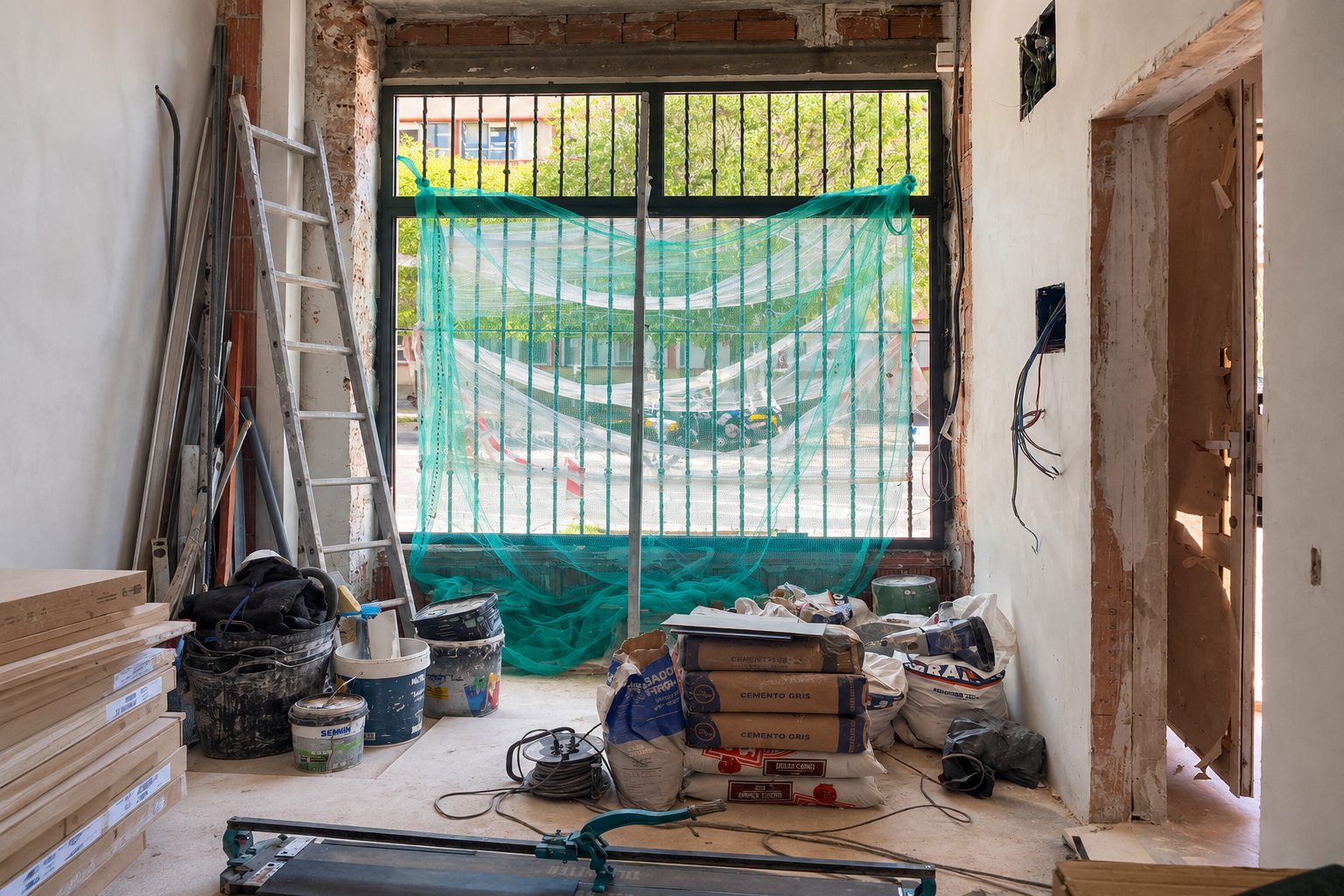
When someone has a building and wants to turn it into accommodation, it's very easy to start with the most visible part.
How many rooms can we fit? What will they be like? Will there be breakfast? Do we need common areas? What category will it have? What style do we want? What services should it offer?
They're necessary questions.
But we prefer to start a little earlier.
What business makes sense to build here?
Because before deciding what the accommodation will be like, we need to understand what that asset can sustain, in that market, with that investment and with a given cost structure.
And some of the decisions that will most shape its future profitability are made precisely at that moment, when there are still no rooms, guests or prices.
Before designing the accommodation, it's worth understanding what business we want —and are able— to build.
First we need to know what business the numbers can sustain
When we work on a new project, one of the first things we do is try to build a reasonable picture of how it could perform.
We analyse the market, demand, seasonality, the competition and the possible positioning. We estimate occupancy, prices and revenue. We start adding costs, structure, investment and different scenarios.
Not to guess exactly what will happen when the property opens. That would be impossible.
We do it to check whether the decisions we're considering make economic sense before turning them into something hard to change.
Because an idea can be fantastic and still not be viable.
And the opposite can happen too: an asset that initially seemed to have limited potential can hide a much more interesting opportunity once we understand the market better and run the numbers.
Feasibility shouldn't come at the end to confirm the project.
It should help us build it.
The numbers start to define the product
From there, the conversation about product changes quite a lot.
We're no longer just deciding what would look best in the space.
We start asking which unit types make sense, how to split the available square metres, what capacity each unit should have, which common spaces add value, what services we need or where it's worth concentrating the investment.
A bigger room might let you defend a different price or host a different kind of guest. But it can also mean having one room fewer.
Creating a particular common space can greatly improve the product. Or it can eat up very valuable square metres without generating enough return.
Adding a service can help positioning. But it also brings costs we'll have to sustain every day after opening.
There's no universal answer.
What matters is that the product and the business model are being designed at the same time.
Positioning shouldn't be decided on aesthetics alone either
Another fairly easy mistake is to build a product first and only then ask how to position it.
For us, the two are connected from much earlier on.
If we want to occupy a certain space in the market, the product has to be able to sustain it. The location, the rooms, the spaces, the services, the experience and also the way it's operated have to be consistent with what we expect the guest to be willing to pay.
And, at the same time, the market has to show enough demand for that positioning.
Deciding to create a premium product isn't enough to be able to charge premium prices.
Nor does it make sense to undervalue an asset that could compete in a much more interesting space.
That's why we analyse product, market and numbers together. Each one sets limits —and also opens up possibilities— for the others.
Some decisions are very hard to change later
- A rate can be changed tomorrow.
- A campaign can be stopped.
- A channel can be opened or closed.
But changing a building's layout, redoing installations, altering rooms or correcting certain product decisions once the works are finished can be far harder and far more expensive.
That's why we're especially keen to get involved while there are still options.
Not because we think everything can be foreseen before opening. Some decisions can only be made once real demand appears and we start learning from how guests behave.
But we can try to make sure the hardest decisions to reverse have been made with all the information available.
If you're deciding today how to lay out the rooms, what categories they'll have, where the kitchen will go or which common areas are really necessary, those decisions deserve your full attention. They are precisely the ones that will be hardest to change later.
Opening isn't the end of feasibility
Then comes the moment to turn all those hypotheses into a real business.
Technology, distribution, categories, rates, processes and sales all need setting up. You start generating demand. You open the doors.
And then something very interesting happens: the market starts answering questions we could only estimate until then.
We find out which room types are most in demand, what prices the market accepts, how guests book, which channels work, which services they value and where our hypotheses were right — or not.
That's why feasibility isn't a spreadsheet we build at the start and file away in a folder.
The hypotheses we built the project on have to be tested against reality afterwards.
And when reality tells us something different, it's time to decide again.
The project starts before the property
When we work on a new project, we don't try to decide from day one how everything should be.
We try to understand what business we can build with what's in front of us.
Then come the product, the positioning, the investment, the technology, the distribution, the Revenue Management and the opening.
But the order matters.
Because once the property is built, we'll have plenty of levers to improve how it's run.
What will be much harder is fixing what we built wrong from the start.
Before designing the accommodation, it's worth understanding what business we want —and are able— to build.